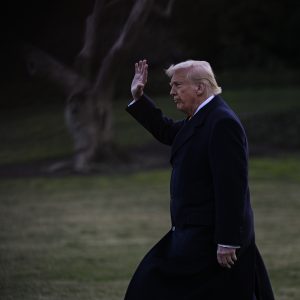
Trump, el-Sisi to co-chair peace summit in Egypt amid Gaza truce
More than 20 global leaders will gather in Egypt to cement ceasefire, chart Gaza’s future, and coordinate reconstruction
© Anadolu Agency
CAIRO, Egypt (MNTV) — U.S. President Donald Trump and Egyptian President Abdel Fattah el-Sisi are set to co-chair a high-stakes international summit on Monday in Sharm el-Sheikh to build on the recently activated Gaza ceasefire and negotiate the next steps in implementing Trump’s 20-point peace plan.
The gathering will bring together leaders from over two dozen countries, regional powers, and global institutions.
According to the Egyptian presidency, the summit aims “to end the war in the Gaza Strip, enhance efforts to achieve peace and stability in the Middle East, and usher in a new era of regional security and stability.”
Reuters reported that Israeli Prime Minister Benjamin Netanyahu will attend, as will Palestinian President Mahmoud Abbas.
Who’s attending — and who isn’t
Egyptian state media and the Anadolu Agency have released a fact-box listing expected participants from 27 countries, including Turkiye, Qatar, Jordan, Kuwait, Bahrain, Germany, Italy, Spain, France, the United Kingdom, Pakistan, Indonesia, Iraq, and others.
Al Jazeera and Reuters concur that Netanyahu’s participation was confirmed following a three-way call between Trump, Netanyahu, and el-Sisi.
Reports also indicate Israeli officials initially declined to join the summit but later reversed their decision.
Notably Hamas has declined direct participation. Iran reportedly received an invitation but chose not to attend, citing geopolitical tensions and U.S. sanctions, according to Iran International.
Agenda: Phase two, reconciliation, reconstruction
While the first phase of Trump’s plan focused on the mutual release of Israeli captives and Palestinian detainees and partial Israeli troop withdrawals, the summit is expected to address the remaining and more complex elements of the deal. These include:
- The future governance of Gaza, with proposals to limit Hamas’s formal role and vest authority in a new administrative body
- Deployment of a multinational security force to oversee stability in Gaza
- Gradual disarmament of militant groups within the enclave
- The scaling up of humanitarian aid, reconstruction funding, and infrastructure rehabilitation
- International support for long-term development and governance structures in Gaza
- Mechanisms to ensure compliance, verification, and cross-party accountability in implementation
Al Jazeera’s coverage underscores that while the ceasefire has reduced active hostilities, the underlying disputes over control, authority, and security in Gaza persist.
The outlet flagged that Hamas officials had already raised objections to Israel’s proposed prisoner list, citing concerns over discrepancies and eligibility criteria.
Diplomatic significance and challenges
The summit aims to lend diplomatic legitimacy to the ceasefire and bridge mistrust between the parties. According to ABC News, Israel and Hamas are not expected to engage in direct talks but will rely on mediators.
Analysts warn that success depends on delicate diplomatic choreography. The previous months of indirect negotiations, led by Qatar, Egypt, Turkiye, and U.S. envoys like Steve Witkoff, required bridging deep mistrust.
Pathways to lasting peace remain uncertain. Observers will watch how the summit handles the balance between Gaza’s sovereignty, Israel’s security concerns, and Palestinian aspirations.
The summit is scheduled to last about two hours, with Trump and el-Sisi expected to issue a joint communique at its close.
If sustained, the summit could mark a turning point in the war, shifting momentum from conflict to diplomatic resolution. But amid the ruins of Gaza, many view it as the opening move in a fraught and fragile endeavor.


Read also