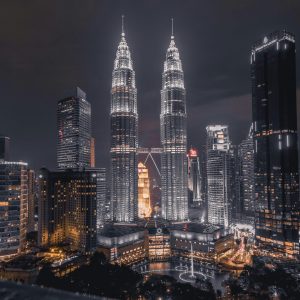
Switzerland’s silent divide: National Day marked by calls to confront Islamophobia
As fireworks light up Swiss skies, a new report reveals systemic bias faced by Muslim citizens—from job markets to classrooms, healthcare to housing
© Photographer: Jay Jarosz
FRIBOURG, Switzerland (MNTV) — As Switzerland prepares to mark its National Day on Friday, a celebration of its unity and democratic heritage, a sobering report has stirred national introspection.
Behind the postcard perfection and alpine calm, Muslim communities across the country are grappling with a starkly different reality—one marked by widespread and systemic discrimination.
A groundbreaking 80-page study by the Swiss Center for Islam and Society (CSIS) at the University of Fribourg paints a disturbing portrait of anti-Muslim racism in public life.
Commissioned by the Federal Service for Combating Racism, the report documents persistent barriers facing Swiss Muslims in employment, education, healthcare, and civic participation.
“This study makes visible what society often chooses to overlook,” said the authors—Noemi Trucco, Asmaa Dehbi, Amir Dziri, and Hansjörg Schmid.
Among the most damning findings is the level of bias in the job market. The report reveals that Muslims in Switzerland are 2.4 times more likely to be unemployed than non-Muslims—not due to qualifications, but because of prejudice. In 2022 alone, 69% of racial discrimination cases reported in Switzerland occurred in employment or hiring.
Jobseekers with names of Turkish, Arab, or Kosovar origin were far less likely to receive interview callbacks than those with typically Swiss names—even when resumes were identical.
“I only got interviews after changing my name on my CV to sound more Swiss,” one respondent confessed.
The report also underscores the gendered dimension of anti-Muslim bias. Women wearing the hijab face additional hurdles in both education and employment. The hijab, researchers noted, is often perceived as a “symbol of absolute otherness,” drawing disproportionate scrutiny and rejection.
In one referenced German case, veiled women had to apply 4.5 times more than their non-veiled peers to receive equal employer interest. In Switzerland, Muslim girls—even those born and raised in the country—struggled to secure apprenticeships, especially in smaller firms.
“Wearing the headscarf, even with perfect French and a Swiss passport, makes me invisible to employers,” said one young woman.
Discrimination in schools, healthcare, and housing
Schools and universities accounted for 27% of anti-Muslim incidents in 2022. Muslim students described being stereotyped, mocked during Ramadan, and denied accommodations for prayer. Some were even pressured to violate dietary laws.
“People think we’re either extremists or oppressed. There’s no space to just be normal,” said one student.
In healthcare, Muslim patients reported being misunderstood or dismissed—especially women requesting gender-sensitive care. Medical professionals of Muslim background faced promotion barriers and implicit bias.
In housing, landlords reportedly rejected applicants based solely on Muslim-sounding names.
The report also documents racial profiling by police and customs officials—at train stations, airports, and borders. Muslim citizens recounted being treated as security threats, even after spending their whole lives in Switzerland.
“They see my name and treat me like I don’t belong. I’m Swiss. I was born here,” said one respondent.
Such incidents have prompted many Muslims to avoid public spaces, modify their behavior or appearance, or disengage from civic institutions altogether—a reflection not of indifference, but exhaustion.
“The normalization of anti-Muslim racism has led many to remain silent,” the report notes. “This silence is not a sign of absence—but of fatigue.”
Swiss Center for Islam and Society: A voice for change
At the heart of this national conversation is the Swiss Center for Islam and Society (CSIS), the only institute of its kind in the country. Established in 2015 at the University of Fribourg, the center trains Muslim leaders, supports academic research, and fosters interfaith dialogue.
Despite political backlash—including an unsuccessful attempt by right-wing parties to shut it down—CSIS has emerged as a respected voice advocating pluralism, democracy, and inclusion.
Urgent recommendations for systemic reform
The CSIS report outlines a set of concrete policy measures to combat anti-Muslim racism:
Create an independent national body to monitor and coordinate responses to anti-Muslim discrimination.
Support Muslim-led organizations as trusted hubs for legal aid, mental health support, and civic outreach.
Revise school curricula and train educators in anti-racist teaching practices.
Promote blind recruitment and strengthen anti-discrimination enforcement in hiring.
Expand intercultural dialogue across marginalized groups.
Fund research on digital hate, healthcare bias, and institutional racism.
These recommendations, the authors argue, are not just about protecting Muslims—they are about safeguarding the Swiss democratic promise.
“Anti-Muslim racism impacts fundamental rights, equal access to education, healthcare, and democratic participation,” the authors write. “The report is not a call for pity, but for action.”
As Swiss flags are raised and bonfires lit on National Day, the CSIS study acts as a powerful counterpoint—one that asks whether the nation’s democratic ideals are being upheld for all its citizens.
While Switzerland is renowned for its peace, prosperity, and pristine neutrality, the experiences of its Muslim population tell a more complicated story. The challenge now is not just to celebrate national pride, but to ensure that inclusion is more than symbolic.
Because for a truly united Switzerland, equality must reach every name on every CV, every headscarf in every classroom, and every citizen walking through every train station.

Read also