Strait of Hormuz oil traffic plunges 86% amid tanker backlog
Security fears after U.S.–Israeli strikes on Iran bring critical energy corridor to near standstill
© Anadolu Agency
TEHRAN, Iran (MNTV) — Oil tanker movements through the strategically vital Strait of Hormuz have fallen dramatically, with traffic plunging 86 percent on March 1 compared to this year’s daily average, as escalating regional tensions push shipping activity to the brink of paralysis.
The narrow waterway, which links the oil-rich Persian Gulf to global markets via the Gulf of Oman and the Indian Ocean, typically carries nearly 20 percent of the world’s daily oil consumption — roughly 20 million barrels per day — along with substantial volumes of liquefied natural gas (LNG).
Data from real-time analytics firm Kpler shows that 15 tankers transported 21 million barrels of crude on February 27. That number rose slightly on February 28, when 18 vessels carried 21.6 million barrels. However, by March 1, only three tankers, moving a combined 2.8 million barrels, successfully transited the chokepoint.
With average daily flows in 2026 standing at approximately 19.8 million barrels, the March 1 figure represents a steep 86 percent decline.
The data suggests that shippers accelerated exports in the days preceding the latest escalation, likely anticipating heightened risk.
But following the joint U.S.–Israeli strikes on Iran over the weekend, insurance premiums surged and operators began suspending crossings, resulting in a near halt in traffic.
As of Monday, 706 non-Iranian tankers were waiting on either side of the strait. Of these, 334 are crude oil carriers, 109 are transporting refined “dirty” petroleum products such as fuel oil, and 263 are carrying clean petroleum products.
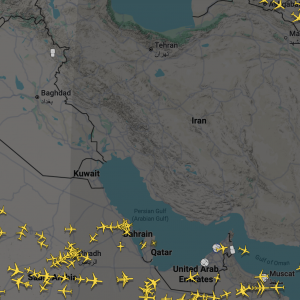
The vessels are positioned across the Persian Gulf west of the strait, as well as the Gulf of Oman and the Arabian Sea to the east.
Even if crude loading continues at Gulf terminals, limited outbound passage through Hormuz is expected to create delivery delays and drive up freight costs. Longer queues and restricted eastbound departures could further strain global supply chains and increase shipping rates.
Following the strikes, reports surfaced alleging that Iran’s Islamic Revolutionary Guard Corps (IRGC) warned ships via the international maritime distress frequency — VHF Channel 16 — that passage through the strait would not be permitted. However, no formal government declaration has confirmed an official closure.
Iranian state media have claimed the strait is effectively shut, though international authorities have not verified a complete blockade.
Several container ships have reportedly reversed course to avoid the corridor, and major global shipping companies have temporarily suspended transits through the strait due to security concerns.
The United Kingdom Maritime Trade Operations (UKMTO) said Sunday that it raised the maritime threat level in the Strait of Hormuz to “critical,” the highest category, after confirming multiple attacks on commercial vessels in the Gulf of Oman, near Musandam, and off the coast of the United Arab Emirates.
With tensions continuing to mount, the world’s most important oil artery remains under severe strain, raising fears of prolonged energy market disruption.


Read also