Myanmar denies genocide charges as Rohingya survivors await justice at UN court
Myanmar presented its defense Friday at the International Court of Justice against genocide allegations related to its treatment of the Rohingya people
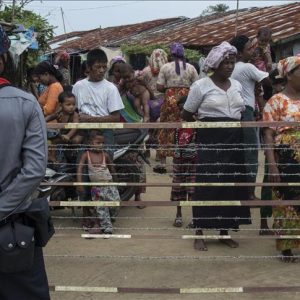
THE HAGUE (MNTV) – Myanmar presented its defense Friday at the International Court of Justice against genocide allegations related to its treatment of the Rohingya people, as survivors of the 2017 military crackdown continue living in sprawling refugee camps in Bangladesh.
Ko Ko Hlaing, representing Myanmar’s military government, told judges at the UN’s highest court in The Hague that accusations brought by The Gambia were “unsubstantiated” and based on unreliable sources.
He characterized a UN fact-finding mission’s reports as “partisan” and a “condemnation without trial.”
The hearings represent a critical moment for over one million Rohingya refugees, thousands of whom were killed during what UN investigators have described as a campaign with genocidal intent.
More than 700,000 Rohingya fled to Bangladesh during the 2017 military operations, joining hundreds of thousands who had already escaped earlier persecution.
Earlier this week, The Gambia’s legal team presented evidence of what they described as systematic attacks designed to erase the Rohingya population.
Foreign Minister Dawda Jallow told the court the Rohingya “had suffered decades of appalling persecution and years of dehumanising propaganda” before the 2017 crackdown.
Philippe Sands, arguing for The Gambia with backing from the 57-nation Organisation of Islamic Cooperation, pointed to the killing of women, children and elderly people, along with village destruction, as evidence contradicting Myanmar’s terrorism defense narrative.
“The only reasonable conclusion to reach is that a genocidal intent permeated and informed Myanmar’s myriad of state-led actions against the Rohingya,” he said.
Myanmar’s representatives insisted the military operations were legitimate counter-terrorism responses to armed group attacks.
Hlaing claimed Myanmar “was not obliged to remain idle and allow terrorists to have free rein of northern Rakhine state,” while acknowledging civilian deaths and mass displacement.
Stefan Talmon, an international law professor representing Myanmar, argued The Gambia must meet an exceptionally high burden of proof—”beyond a reasonable doubt”—to establish genocide.
The ICJ has historically set stringent standards, having found a genocide violation only once, regarding Srebrenica during the Bosnian War.
Myanmar’s government also disputed characterizations of how it views the Rohingya, claiming it doesn’t deny their existence or rights, though it referred to them using the term “Bengalis”—language many Rohingya reject as denying their distinct identity and connection to Myanmar.
The military government said it remains committed to repatriating displaced people from Bangladesh, citing bilateral agreements, though COVID-19 and other factors have delayed these efforts.
However, conditions in Rakhine state remain dangerous, with continued conflict and persecution.
The court has scheduled three days for witness testimony, including Rohingya survivors, though these sessions will be closed to public and media.
A final ruling isn’t expected until late 2026.
This case, filed by The Gambia in 2019, is the first genocide proceeding at the ICJ in over a decade and could establish important precedents for other cases, including South Africa’s genocide allegations against Israel over Gaza operations.
The 1948 UN Genocide Convention defines genocide as acts “committed with intent to destroy, in whole or in part, a national, ethnical, racial or religious group”—a definition adopted following the Holocaust that now faces renewed scrutiny in The Hague.



Read also