Israeli airstrikes in Gaza kill 55 as famine looms for thousands
As air raids kill dozens across Gaza, a UN agency warns that 14,000 babies face death by starvation
© Anadolu Agency
GAZA, Palestine (MNTV) — At least 55 Palestinians were killed on Thursday in a new wave of relentless Israeli airstrikes across the besieged Gaza Strip.
The heaviest bombardment hit the Bureij refugee camp in central Gaza, where a single Israeli airstrike flattened a family home, killing 23 people.
Another 10 were killed in an airstrike that obliterated a car at Al-Saraya junction, a crowded intersection in Gaza City.
In northern Gaza’s Jabalia, seven people — including women and children — perished when another home was struck.
Medics are still retrieving bodies from the rubble, many burned beyond recognition, as Gaza’s healthcare system teeters on collapse.
Elsewhere, nine Palestinian police officers were killed during an Israeli attack near Gaza City while reportedly attempting to disperse looters amid widespread lawlessness driven by food shortages and social collapse caused by Israeli besiegement.
A drone strike in Khan Younis killed a man and his pregnant wife, while a 13-year-old child died in Deir al-Balah when a tent housing displaced families was hit. T
hree more bodies were recovered from beneath rubble in Shejaiya.
Collapse of infrastructure in Gaza
Inside Gaza, the despair is palpable. More than 1.9 million people—over 85% of the population—are displaced, many of them multiple times over. Schools, mosques, hospitals and even UN shelters have not been spared from airstrikes.
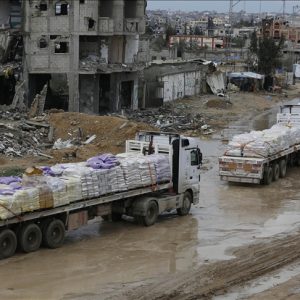
Basic infrastructure has collapsed. There is no running water in large parts of the Strip. Electricity is non-existent. Only a trickle of humanitarian aid is reaching the area, and aid convoys are frequently attacked or delayed.
IHH, a humanitarian organisation based in Istanbul, confirmed that five of its aid workers were killed in recent airstrikes while delivering supplies in coordination with the UN World Food Programme (WFP).
“Every hour we delay a ceasefire, more lives are lost — not just to bombs, but to hunger, thirst, and disease,” said WFP Executive Director Cindy McCain, who warned earlier this week that half a million Gazans are at immediate risk of famine.
According to Gaza’s Health Ministry, the war has now claimed 54,249 lives and injured 123,492 people, many of them women and children. The real numbers may be far higher, as thousands remain trapped beneath destroyed buildings and rubble.
Amid the ongoing bombardment, a graver, quieter crisis is unfolding: famine.
According to the United Nations, 14,000 infants in Gaza are at imminent risk of dying from starvation and malnutrition due to the near-total collapse of the food supply system and medical services.
UN experts described the situation as a man-made catastrophe, not a natural disaster. “Israel’s deliberate starvation campaign has turned Gaza into a graveyard for children,” said Michael Fakhri, the UN Special Rapporteur on the Right to Food. He stressed that famine in northern Gaza is not just a threat—it is already happening.
In a joint statement released Wednesday, three UN special rapporteurs stated that Israel’s actions—cutting off food, targeting aid convoys, and destroying farmland—constitute war crimes. “We have found credible evidence that Israel is weaponizing food against civilians,” the statement read.
Hospitals in northern Gaza, already overwhelmed by the war wounded, have stopped receiving food and fuel. Al-Awda Hospital in Jabalia has been ordered to evacuate, putting its patients in direct danger.
Netanyahu refuses to ‘back down’
Even as the death toll mounts and famine spreads, diplomatic efforts continue to stall. However, there are fresh signs of internal dissent within Israel’s political establishment.
Israeli opposition leader Yair Lapid broke ranks on Thursday, urging Prime Minister Benjamin Netanyahu to accept a US-brokered ceasefire proposal mediated by American envoy Steve Witkoff.
“Israel must publicly and immediately accept the outline published this morning,” Lapid posted on X, warning of the long-term strategic damage of continuing the war indefinitely.
Despite this, the Netanyahu government shows little sign of backing down.
In a move seen as inflaming tensions further, Israel has also approved the establishment of 22 new illegal settlements in the occupied West Bank — the largest one-time expansion in its history. International law deems all Israeli settlements in occupied territory illegal, a position reaffirmed by the United Nations and most countries.
Palestinians and rights organisations say the expansion is part of a broader strategy to permanently alter the demographic and political map of the region, undermining any future prospects for a two-state solution.
Israel’s military campaign in Gaza continues under the shadow of multiple international legal cases.
In November 2024, the International Criminal Court (ICC) issued arrest warrants for Prime Minister Netanyahu and his former Defence Minister Yoav Gallant for war crimes and crimes against humanity committed in Gaza.
Simultaneously, Israel faces a genocide case at the International Court of Justice (ICJ), with hearings underway to determine whether its military campaign constitutes the crime of genocide under international law.
Both cases are likely to stretch on for months or even years, but they have increased diplomatic pressure on Israel and deepened its international isolation.



Read also