India’s top court refuses to drop charges against Muslim man over Babri Masjid post
Case underscores how public references to Babri Masjid remain a legal and political flashpoint for India’s Muslim minority
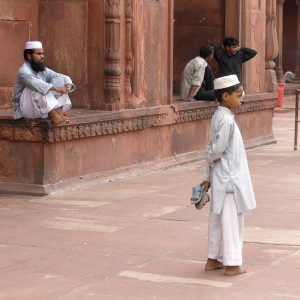
© File Photo
NEW DELHI, India (MNTV) — India’s Supreme Court has refused to quash criminal charges against a Muslim man accused of posting an emotional message about the demolished Babri Masjid, underscoring what rights advocates call the shrinking space for Muslims to express faith and historical memory in the country.
Mohammad Faiyyaz Mansuri, a law graduate from Uttar Pradesh, had sought relief after being charged under multiple sections of the penal code for a 2020 Facebook post that read: “Babri Masjid will one day be rebuilt, just like Turkey’s Sophia Mosque.” The post, prosecutors alleged, promoted enmity and hurt religious sentiments.
A bench comprising Justices Surya Kant and Joymalya Bagchi declined to intervene, dismissing Mansuri’s plea and directing the trial court to proceed. “We have gone through the post. Don’t invite any comment from us,” Justice Kant said while refusing to quash the case.
Mansuri was arrested soon after his post went viral and even detained under India’s National Security Act — a law allowing imprisonment without trial — before the Allahabad High Court struck down the order in 2021. He insists his account was hacked and that inflammatory comments were added by another user under a fake profile.
But the case has taken on significance far beyond one man’s Facebook post. For many observers, it reflects a growing climate in which Muslim expression — even when nonviolent or symbolic — is treated as provocation.
The Babri Masjid, a 16th-century mosque built under Mughal Emperor Babur, was torn down by Hindu extremist mobs on December 6, 1992. The demolition, carried out by groups affiliated with the RSS, VHP, and BJP, triggered anti-Muslim riots that killed more than 2,000 people across India.
That event, widely regarded as a turning point in India’s secular fabric, continues to cast a long shadow. In 2019, the Supreme Court ruled that the demolition was an “egregious violation of the rule of law” but still awarded the disputed land to Hindu claimants to build a Ram temple — now nearing completion in Ayodhya.
Mansuri’s case, analysts say, reveals how even peaceful references to that destroyed mosque remain perilous for Muslims three decades later. Posts recalling Babri Masjid or its symbolism increasingly invite criminal scrutiny under laws on sedition, cybercrime, or “hurting religious sentiments.”


Read also