
Envoy calls for national response to Islamophobia in Australia
Aftab Malik’s upcoming report seeks to bridge communities, reshape public perceptions, and push for government action on systemic discrimination
© File Photo
SYDNEY, Australia (MNTV) – Islamophobia in Australia is “structural and systemic,” according to Special Envoy Aftab Malik, who will present a report to the government this month outlining practical steps to combat discrimination against Muslims nationwide.
Malik describes the task as both urgent and deeply challenging. “Islamophobia is not just about one person insulting another. It’s much deeper—structural, institutional, and systemic,” he told AMUST. “My job is to capture those concerns, analyse them, and present recommendations that are practical and achievable.”
Since his appointment, Malik has travelled widely across Australia to listen to Muslim communities. Their concerns echo a consistent theme: Islamophobia is lived daily in schools, workplaces, and public spaces.
While some experiences are overt—harassment, abuse, discrimination—others are subtle but equally damaging, such as underrepresentation, stereotyping, and media bias.
“What has struck me is the breadth of experiences,” Malik explained. “From young Muslims in regional towns to professionals in our cities, people are asking: when will we be seen beyond the stereotypes? When will we be treated with fairness?”
But Malik’s mission has not been without controversy. He has faced personal criticism, much of it circulating on social media and WhatsApp groups.
Some accuse him of being “too close to power” due to his government background. Malik acknowledges the criticism but insists his integrity remains intact.
“Prophet Yusuf (AS) was close to power too. It’s about moral intention. I didn’t join the government to chase influence, but to help shape policy. At the end of the day, I’ll be accountable to God for my intentions.”
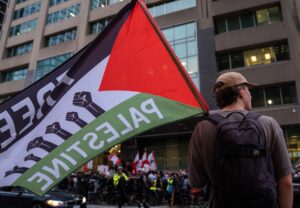
The envoy also distinguishes between Islamophobia and anti-Palestinian racism, noting that while the two often intersect, they are not the same.
“Islamophobia entails fear and hatred of Islam and Muslims across many ethnicities. Anti-Palestinian racism is more specific—it erases Palestinian identity and narrative. Both are serious, but they must be addressed distinctly.”
Malik’s recommendations will be aimed at three audiences: Muslim communities, wider Australian society, and the government. For Muslims, he hopes to reflect their lived realities and amplify their voices.
For the wider public, he wants to show that Islamophobia is not an abstract concept but a real, pressing problem. And for the government, he intends to provide concrete, workable steps.
“Having spent years in government, I understand process and protocol. Recommendations have to be framed in a way that policymakers can incorporate, rather than as a wish list,” he said.
Muslim communities consulted by Malik set clear measures of success: that his recommendations are accepted by the government, that he can push back against hostile media framing, and that his work helps spark a cultural shift in perceptions of Muslims.
Malik is realistic about the scale of the task. “Communities told me such change will take at least 10 years, and one envoy alone cannot achieve it. But it’s the direction I must work towards.”


Read also


