Christmas in shadow of war: Palestinian loss and endurance from Bethlehem to Gaza
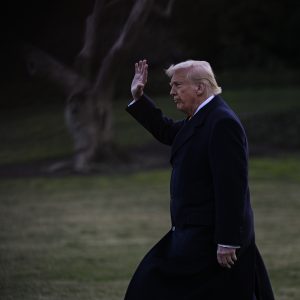
On the eve of Christmas, Palestinian political leader Mustafa Barghouti framed the season through the language of history and pain
© AA
BETHLEHEM, Palestine (MNTV) — On the eve of Christmas, Palestinian political leader Mustafa Barghouti framed the season through the language of history and pain.
“Jesus Christ was perhaps the first Palestinian to suffer torture and pain,” Barghouti said. “His story reflects what Palestinians are still experiencing today.”
The same suffering is being inflicted, even after 2,000 years, by Israel.
Barghouti’s words have set the tone for a Christmas marked not by public celebration but by mourning, restraint, and endurance across Palestine. From Gaza to Bethlehem, church bells ring softly, if at all, as war, displacement, and loss overshadow one of Christianity’s most sacred days.
Across much of the world, Christmas is associated with lights, gifts, and gatherings. In Palestine, it arrives under siege conditions, amid destroyed homes, damaged churches, and families grieving loved ones killed in the ongoing war.
In Gaza, the Christian community is observing Christmas without public celebrations for the third consecutive year. Church leaders say repeated ceasefire violations, severe restrictions on humanitarian aid, and continued military operations have made festive observances impossible.
“Churches have suspended all celebrations outside their walls because of the conditions Gaza is going through,” said Youssef Tarazi, a 31-year-old Palestinian Christian from Gaza City.
“We are marking the birth of Jesus Christ through prayer inside the church only, but our joy remains incomplete.”
Before the war, Christmas in Gaza was a communal affair. Church courtyards became gathering spaces, streets were decorated with lights, and carols echoed through neighborhoods. Muslim neighbors often joined Christian families, including for the annual lighting of a large Christmas tree in Gaza City.
“This year, we cannot celebrate while we are still grieving for those killed, including during attacks on churches,” Tarazi said. “Nothing feels the same anymore. Many members of our community will not be with us this Christmas.”
Church officials say the physical and human toll on Gaza’s Christian population has been devastating.
Since October 2023, Christian homes, schools, and churches have been damaged or destroyed during Israeli military operations. Three historic churches, the Church of Saint Porphyrius, the Holy Family Church, and the Gaza Baptist Church, have suffered severe damage.
George Anton, director of operations at the Latin Patriarchate in Gaza and head of its emergency committee, said at least 53 Christians have been killed directly or indirectly during the war.
“Some were killed in air strikes, while others died because we could not reach hospitals or provide medicine, especially elderly people with chronic illnesses,” Anton said.
He said the scale of displacement has left Gaza with its smallest Christian population in decades.
“What happens to Gaza happens to us”
More than 400 Christians have left the enclave during the war, fearing for their lives after relatives and friends were killed. About 220 Christian families, roughly 580 people, remain, most belonging to the Greek Orthodox and Latin Catholic churches.
“Those of us who remain are determined to stay,” Anton said, while acknowledging that worsening humanitarian conditions may force more families to leave in search of medical care and stability.
“The situation affects everyone — Christians and Muslims alike. We are part of this society, and what happens to Gaza happens to us.”
Anton said churches are limiting observances to prayers and a nativity scene inside church buildings.
“In the past, we decorated our homes. Now, many homes are gone,” he said. “We decorated the streets. Even the streets are gone. There is nothing to celebrate.”
The war’s impact on Gaza’s Christian heritage has been particularly painful.
On October 20, 2023, Israeli strikes hit the Church of Saint Porphyrius complex, killing at least 16 people who had sought refuge there. Built on a site used for Christian worship since the fifth century, it is among the oldest churches in the world.
In another incident, Israeli fire struck Gaza’s only Catholic church in July, killing two women and injuring several others, including the parish priest.
“All Palestinians, including the Christian community, are still living with the consequences of the war,” Anton said. “We are grieving, frustrated, and unstable. We cannot celebrate as if nothing has happened.”
“Little town” Bethlehem lives under military occupation
In the occupied West Bank, Bethlehem — the birthplace of Jesus- is also marking a subdued Christmas. The city is encircled by Israel’s separation wall and military checkpoints, limiting movement and cutting residents off from Jerusalem and the surrounding areas.
For many Palestinian Christians, the contrast between Bethlehem’s global image and daily reality is stark. While millions around the world sing of a “little town” glowing in peace, Bethlehem today lives under military occupation, economic pressure, and political uncertainty.
British writer and activist Jonathan Purcell, who visited the occupied Palestinian territory earlier this year, described an “oppressive atmosphere” affecting Palestinians of all faiths.
He recounted incidents of harassment, intimidation, and restricted access to Christian holy sites, often under the watch of Israeli security forces.
“Whether the harassment comes from extremist settlers or the military themselves, it is always happening under the army’s watchful eye,” Purcell wrote, describing spitting incidents, verbal abuse, and restrictions on worshippers near Jerusalem’s holy sites.
Christmas in Palestine symbolizes shared suffering, sense of loss
Palestinian church leaders stress that Christmas in Palestine has never been solely a Christian affair. In Jerusalem, the Mosque of Omar stands beside the Holy Sepulchre, symbolizing centuries of shared history.
Just outside the Church of the Nativity, the birthplace of Jesus Christ, also lies the Mosque of Omar, built on land gifted by the Greek Orthodox Church and named after Caliph Omar, who granted protection to Christians and Jews.
“Christians and Muslims share the same suffering and the same sense of loss,” Anton said. “Our struggle is shared.”
Palestinian pastor and theologian Munther Isaac has argued that Christmas itself is often misunderstood in the West. In a widely cited opinion piece, Isaac wrote that Christianity is not a Western religion but a Middle Eastern one, rooted in the lived experiences of people under empire, occupation, and displacement.
“Jesus was born under military occupation, to a displaced family, in a region living under the shadow of violence,” Isaac wrote. “Christmas is a story of empire, injustice, and the vulnerability of ordinary people caught in its path.”
Isaac said the story of Bethlehem today mirrors the original Christmas narrative more closely than the commercialized celebrations seen elsewhere.
“To remember Bethlehem is to remember that God stands with the oppressed,” he wrote. “And that the followers of Jesus are called to do the same.”
‘Faith endures, even under occupation’
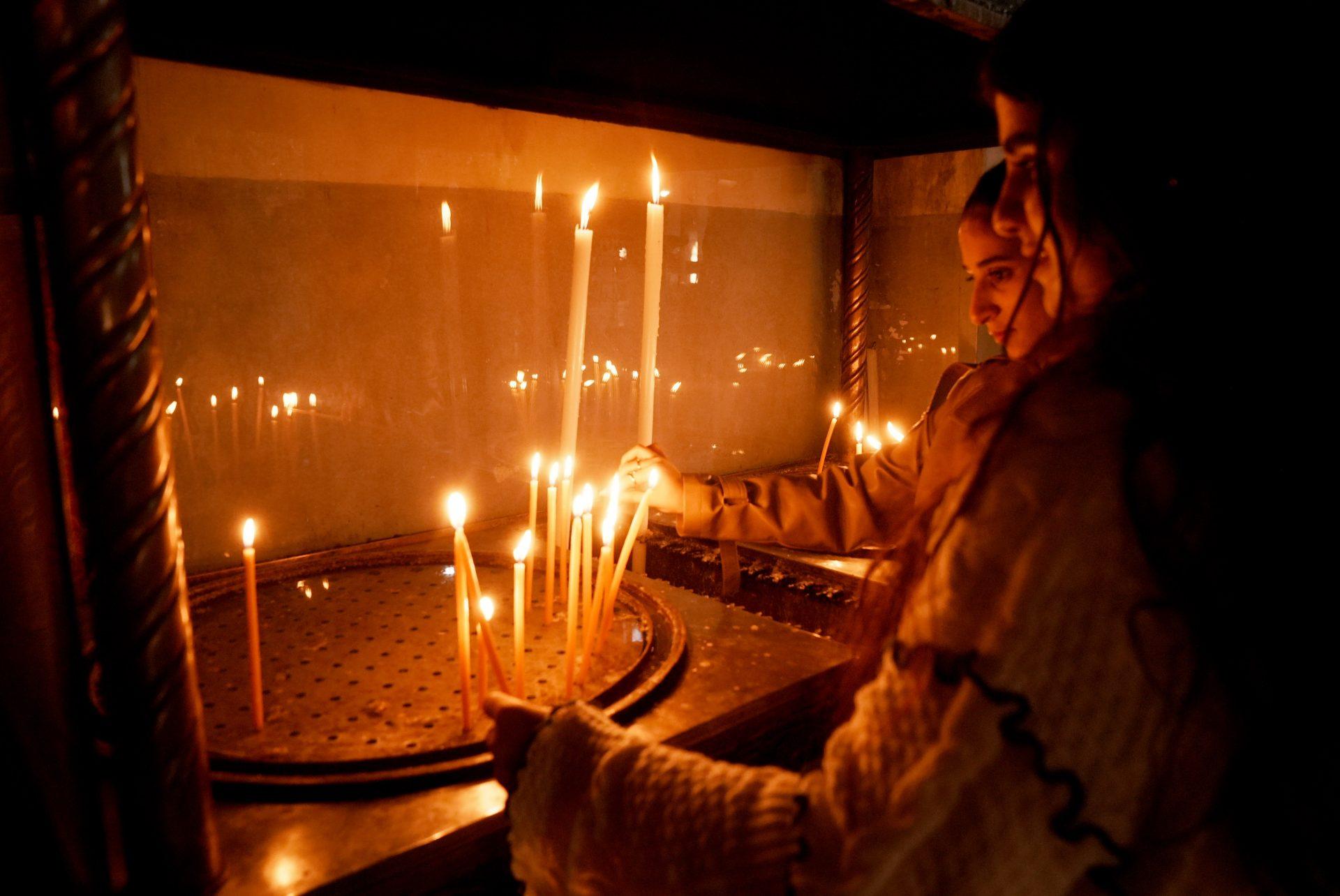
For Palestinians, this Christmas is less about festivity than about survival and witness. In Gaza, prayers are whispered inside damaged churches. In Bethlehem, streets remain quiet, and families gather modestly, if at all.
Barghouti said the meaning of Christmas in Palestine lies in resilience.
“Despite everything, people remain rooted in their land,” he said. “Faith endures, even under الاحتلال (occupation).”
As the season passes without lights or public celebrations, Palestinian Christians say their message to the world is simple: Christmas did not begin in comfort or power, but in hardship and hope.
In Palestine this year, that hope survives amid rubble, silence, and prayer — a reminder that, even in the darkest seasons, faith and identity endure.


Read also