Braille, music, and clay – How Hunza Valley is redefining special education in Pakistan
As the world marks World Braille Day today, the story of the Differently-abled Persons' Association (DPA) School in the Hunza Valley serves as a powerful reminder of how inclusive education can change lives in Pakistan's most remote communities
© MNTV
By Staff Writer
World Braille Day Special Report
ALIABAD, HUNZA VALLEY (MNTV) – In a small classroom nestled in the mountainous terrain of the Hunza Valley, fingers move rhythmically across raised dots on paper.
For Aisha, Faizan, Hanifa, Sumera, Saira, and Uzma, these tiny bumps represent more than just letters – they are pathways to independence, education, and dreams.
As the world marks World Braille Day today, the story of the Differently-abled Persons’ Association (DPA) School in the Hunza Valley serves as a powerful reminder of how inclusive education can change lives in Pakistan’s most remote communities.
On October 15, 2021, Samina and her husband Shakoor – both visually impaired – opened the doors to what would become Hunza Valley’s only school for children with disabilities.
Their journey was deeply personal. Samina had faced tremendous hurdles while pursuing her master’s degree at Karachi University, far from home in a city of 20 million, where people with different abilities are often seen as liabilities.
As a mother to a visually impaired daughter and sister to a visually impaired sibling, these struggles had always surrounded her.
When she married Shakoor, who shared both her visual impairment and her vision for change, they decided to start a new journey together. With support from local donors and the business community, and a basic two-room structure provided by the Education Department, they established DPA School.
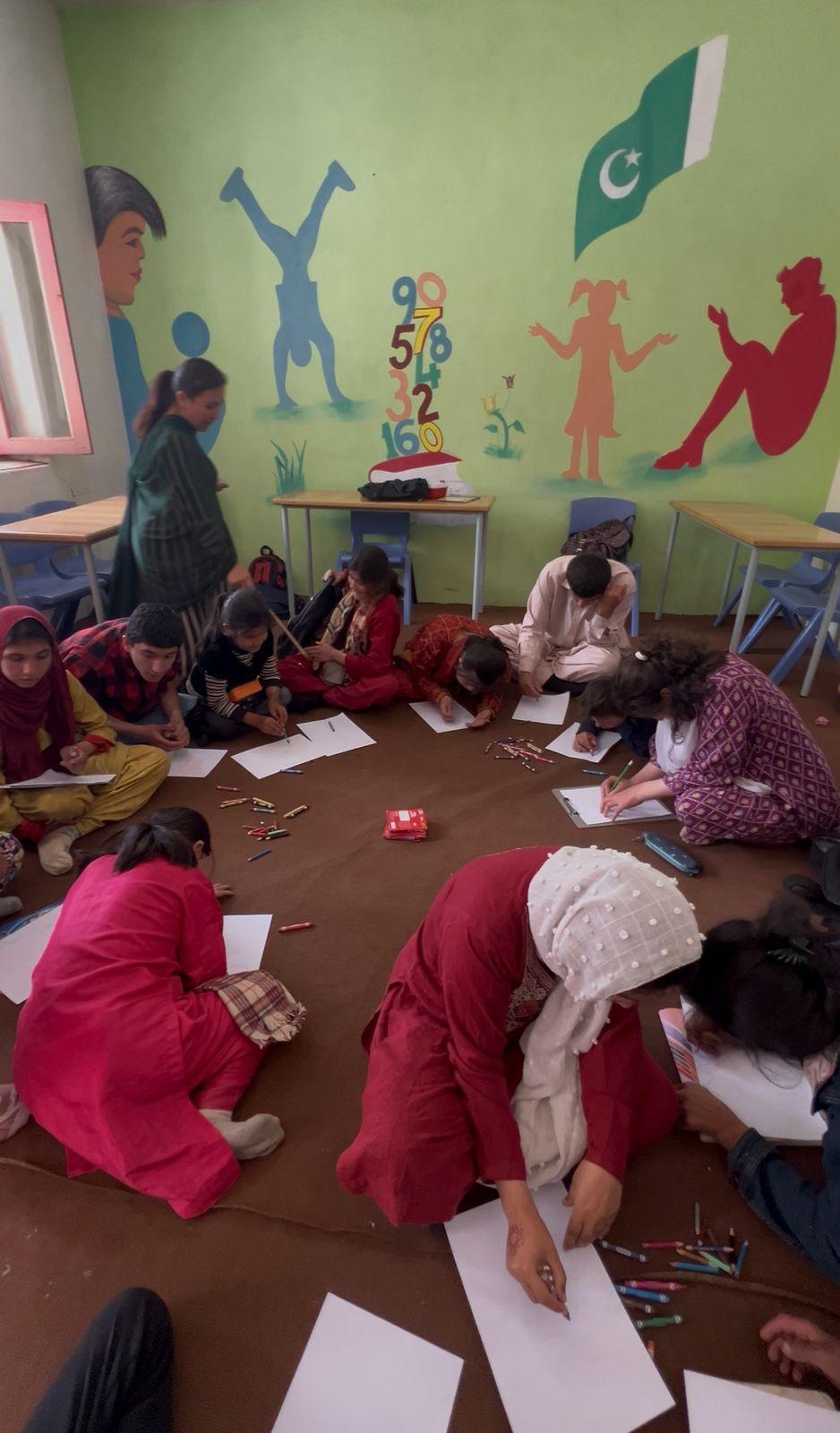
Today, 27 students walk through its doors – children with intellectual disabilities, Down syndrome, cerebral palsy, learning difficulties, and visual impairments.
The school is registered with the Gilgit Social Welfare Board, and all board members and many teachers are themselves differently-abled.

When two friends saw what others missed
For nearly four years, DPA School operated in near obscurity. Only families of students and members of the Differently-abled Persons’ Association knew of its existence.
The majority of Hunza’s community had no idea a school for differently-abled children even existed in their valley.
That changed in May 2024, when two friends – Yasir, an anthropologist, and Sajjad, an artist who graduated from the National College of Arts – walked through the school’s doors as volunteers.
“We witnessed our community undergoing rapid transformation, and with that change came widening gaps that most people rushed past without noticing,” explains Yasir.
They founded Ayash – meaning “sky” in the local context – to see the hidden corners and overlooked spaces in their community.
At DPA School, they found dedicated founders running on determination but struggling with resources. Teachers, paid only 5,000 rupees monthly, lacked formal training in special education.
Visually impaired students were being taught from the same pictorial textbooks as sighted children.
Only one van served students from across Central and Lower Hunza, leaving many without access.
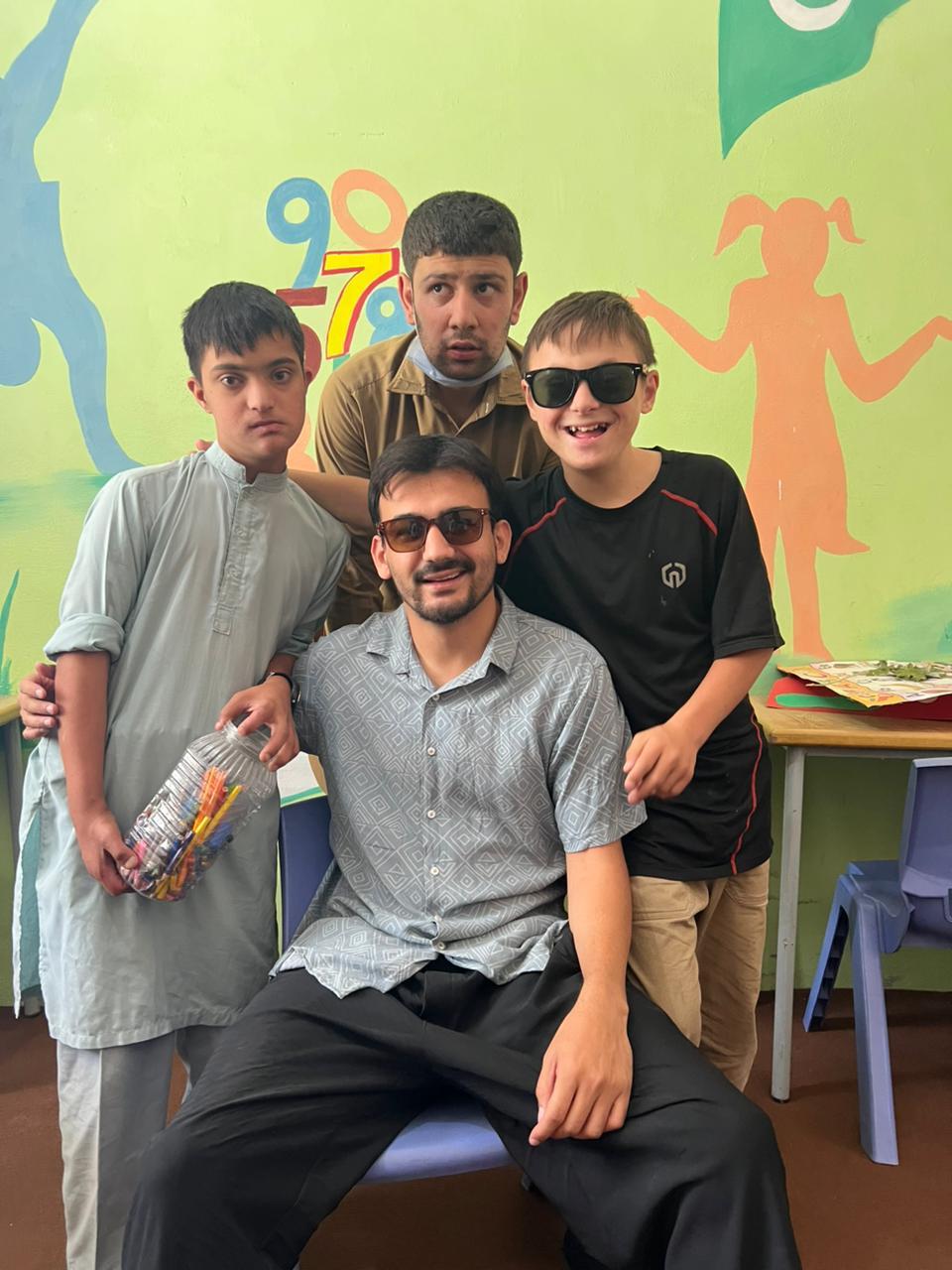
Beyond Braille: Arts, music, and miracles
Yasir began teaching the core curriculum – English, general knowledge, Urdu, and science.
Sajjad focused on music integrated with art. They introduced reading sessions, a favorite among visually impaired students who had no access to Braille books or novels.
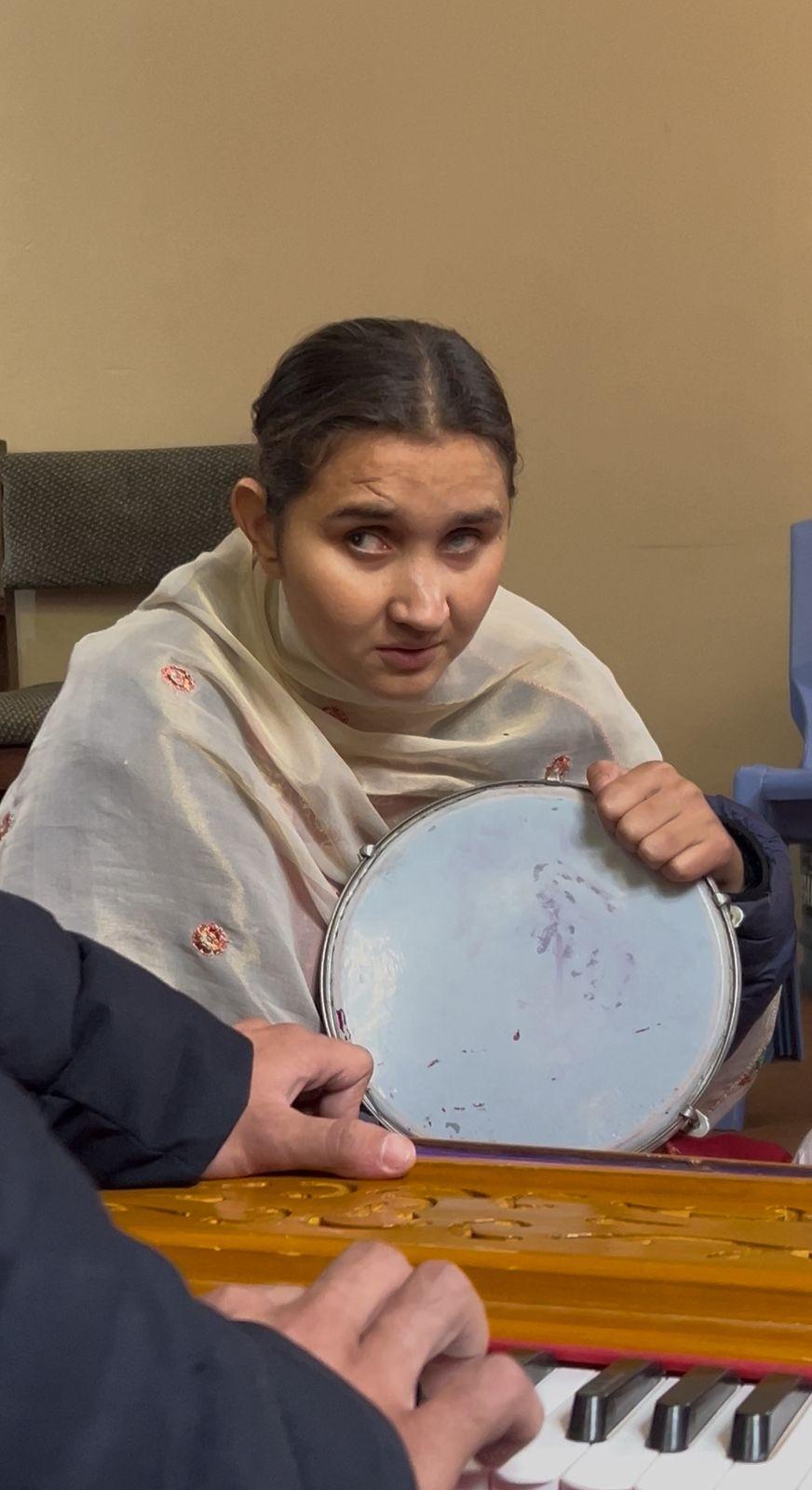
The results have been remarkable. While Principal Samina continues teaching Braille – giving all six visually impaired students a solid foundation in literacy – the music program has flourished under teachers Sir Ilhan and Sir Nazim, both visually impaired musicians skilled in rubab, tumbak, harmonium, and guitar.
Eight to nine students have emerged as genuine musical talents.
The visually impaired students possess beautiful vocals and impressive skill on strings and bass.
Four students with Down syndrome – Nabhan, Sangeeta, Shagufa, and Zuhaib Alam – are mastering tumbak and learning strings. Students now perform at gigs around Hunza.
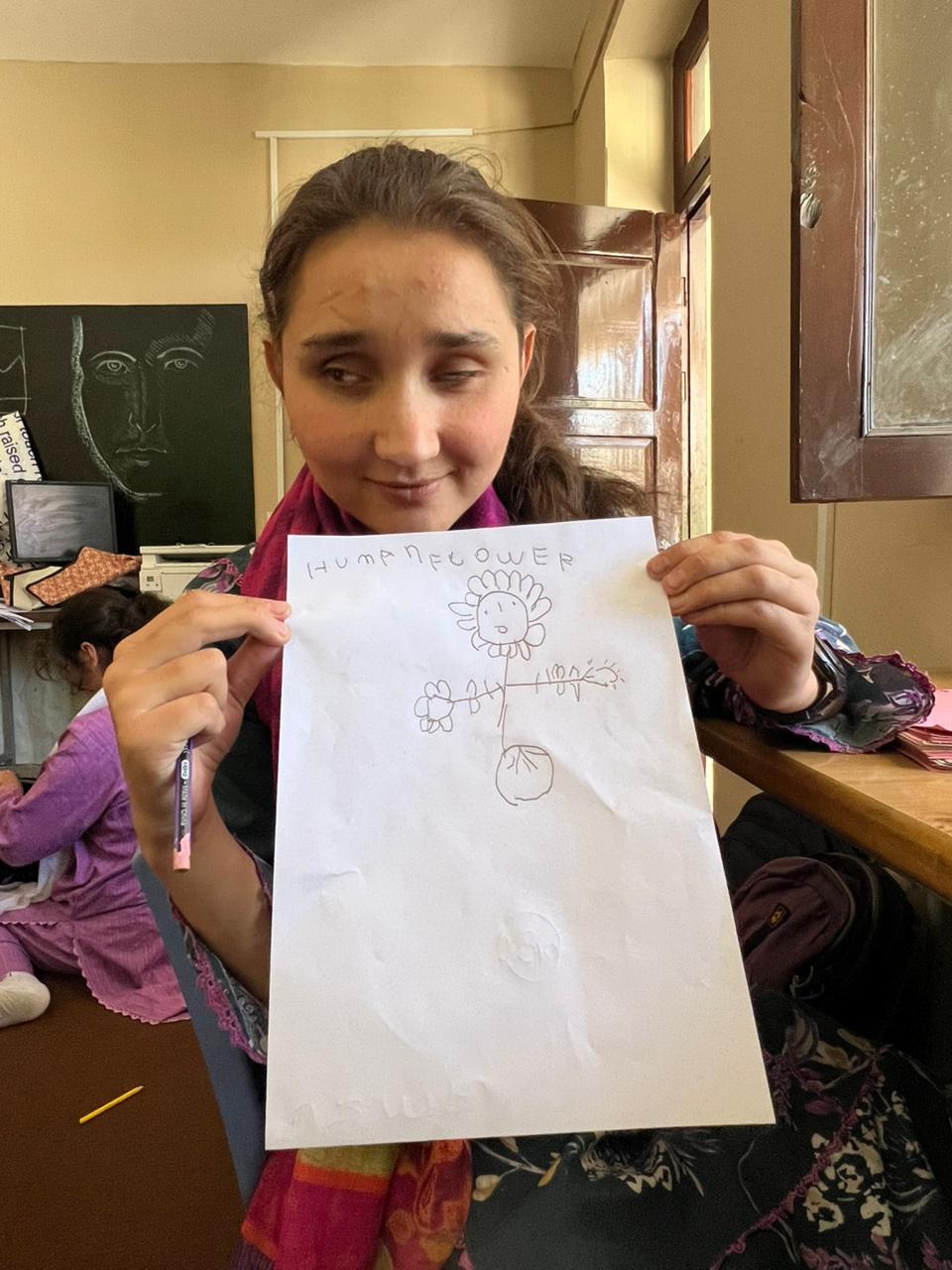
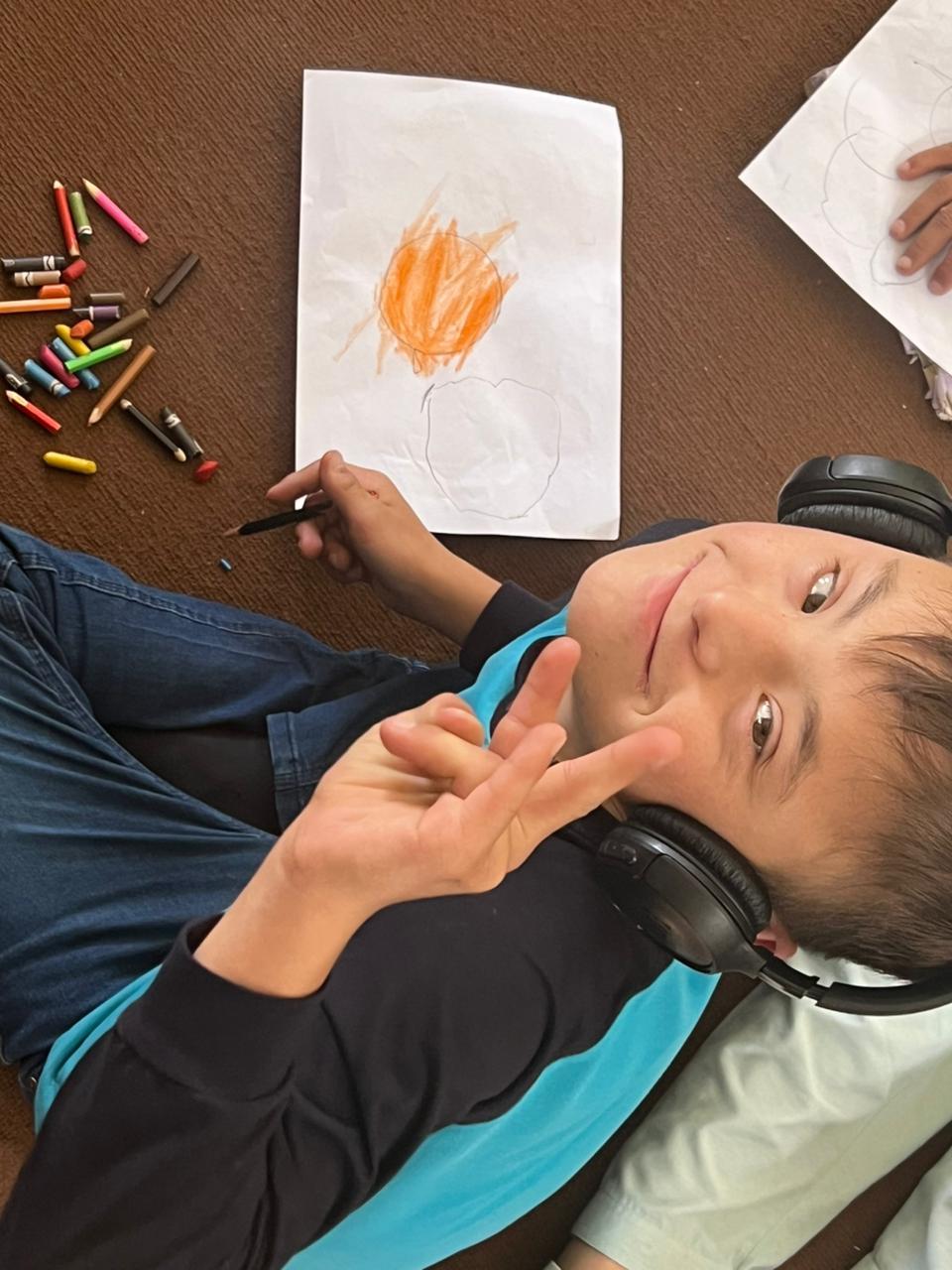
In art classes, magic happens. Nabhan draws and colors boxes every day – each one different, each one visually appealing in how he uses space on paper.
Hanifa, who is visually impaired, once filled a page with trees, then drew houses randomly on top of them. When asked, she explained it represented climate change and its effects on daily life.
Another visually impaired student who sings and plays tumbak, recreates structures from clay through pure feel – her fingers shaping what her eyes cannot see.
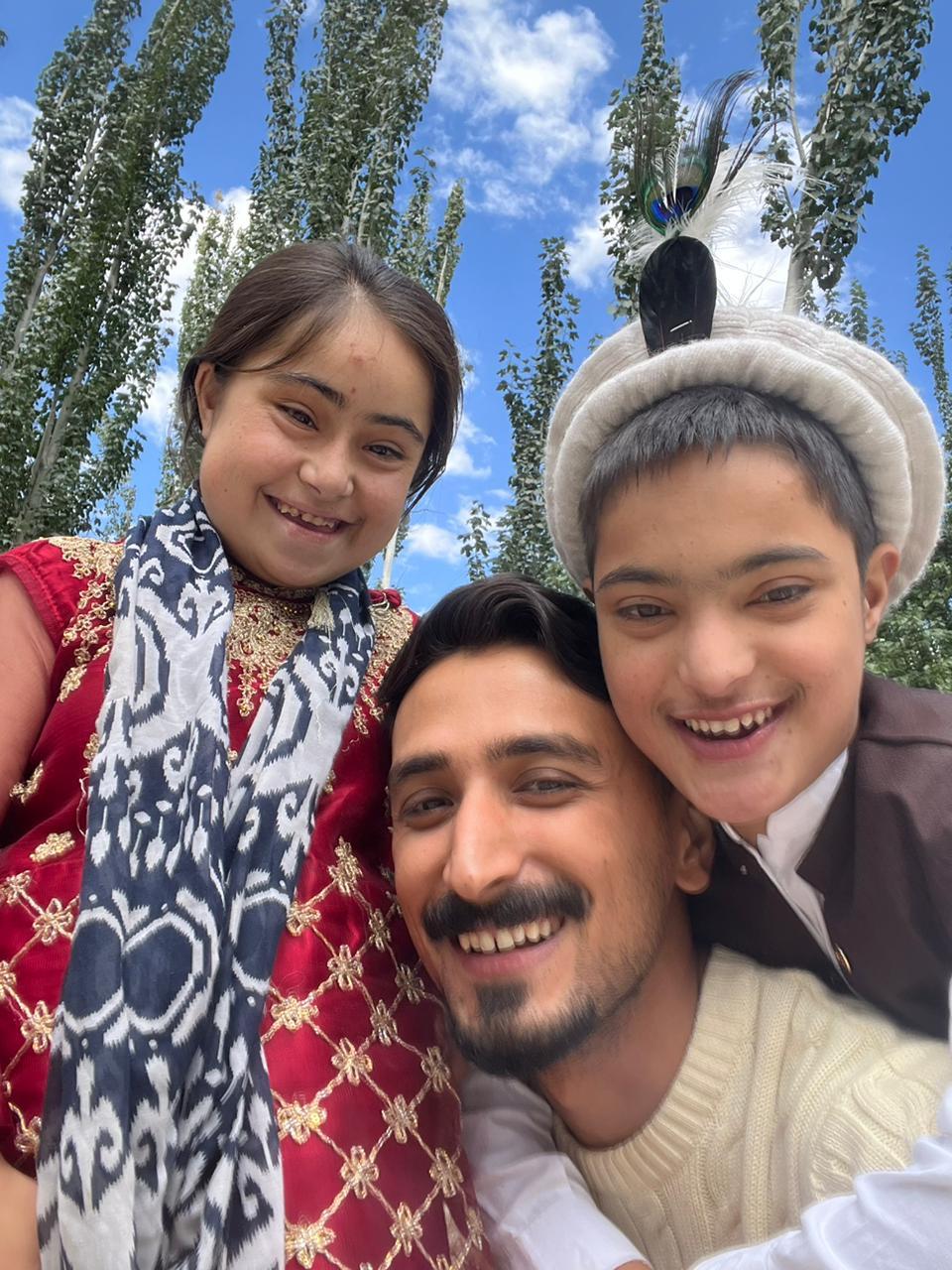
Uzma’s leadership: More than a graduate
Uzma represents DPA School’s greatest success story.
Not only did she graduate and gain admission to a mainstream school – becoming the first DPA student to make this historic transition – but her role at the school transcended academics.
“She is respected more than the teachers,” says Yasir.
“When the class gets out of hand and students make noise, she’s the one who controls it, scolds them, and they all listen. She acts like their mother – when someone is mad or angry with teachers, she talks to them and makes them understand.”
Even students with intellectual disabilities, who are hard to teach or reason with, show Uzma a respect and understanding they demonstrate for no one else.
Perhaps the most beautiful aspect of DPA School is how students care for one another. Whenever visually impaired students walk anywhere, sighted students immediately get up to help – no matter what they’re doing. They hold hands, guide, and assist without being asked.
“There’s never an instance when a visually impaired student is alone in school,” Yasir notes.
Even students who are intellectually disabled or deaf clearly understand when their visually impaired classmates need assistance. The care is instinctive, constant, and mutual.
Since joining, Ayash has systematically addressed gaps. They built an online presence, inviting people to visit and raising awareness. They’ve connected with donors, developed networks, and are now sending teachers for formal inclusivity training. The community response has been overwhelming – people constantly reach out to visit the school and offer financial or voluntary support.
Through their three-pillar model – Education Advocacy, Cultural Documentation via the Gamlay media platform, and Sustainable Products by Gamlay – Yasir and Sajjad are creating a replicable blueprint for special education in remote regions.
They’ve identified talented students for career profiling and mentorship, integrating exceptional performers into Ayash’s broader community development initiatives.
International donors from the United States and Canada are now providing customized curriculum frameworks.
Struggles that remain
Yet challenges persist. When Principal Samina visited the government office to obtain an internet connection for the school, officials made her tea and sent her home. Six months and multiple visits later, no internet device has been issued.
“I don’t think any institution or community is really worried about education for the differently-abled in Gilgit-Baltistan,” says Yasir bluntly. “They are the real marginalized community in our country.”
Transportation remains inadequate. Infrastructure lacks proper accessibility features. Specialized materials are scarce. And differently-abled children remain largely invisible to society.
“I remain hopeless in institutional actions,” Yasir admits, “but hopeful for the actions of individuals who understand the need to change this marginalization.”
Message for World Braille Day
As fingers trace Braille letters in that Hunza classroom today, they’re writing a larger story. Louis Braille’s invention opened doors for blind people worldwide. In Hunza, Samina and Shakoor – navigating their own sightless worlds while raising a blind daughter – are pushing those doors wider.
For the six visually impaired students, Braille represents independence. For Uzma, now in mainstream school, it was a stepping stone to integration. For Samina, teaching those raised dots while managing her own visual impairment alongside her blind sister, it’s an act of solidarity and hope.
But perhaps most importantly, for Yasir and Sajjad – two friends who saw widening gaps others rushed past – this World Braille Day marks validation of their vision. They created Ayash because, like the sky that sees hidden corners and overlooked spaces, someone needed to look.
In the shadow of Hunza’s towering peaks, 27 students are discovering potential society told them they didn’t have. Nabhan colors his boxes. Hanifa draws climate change. Uzma shapes clay and leads with maternal strength. And small hands are touching dreams – one raised Braille dot at a time.
Ayash is in its early developmental phase. DPA School serves 27 students, including 6 visually impaired, 11 with intellectual disabilities, 4 with Down syndrome, 1 with cerebral palsy, 3 with multiple disabilities, and 2 with learning difficulties.
For more information about their programs in Hunza Valley, visit ayash.org or follow their work on Instagram.
Related posts
Read also