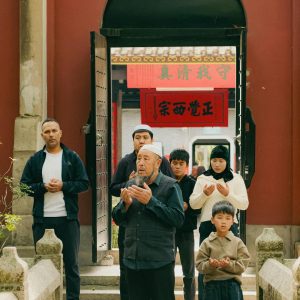
Bangkok forges ahead with ‘Muslims Participate in City Development’ strategy
Thailand capital’s metropolitan administration categorises 187 mosques into four sizes, collecting online data on population
BANGKOK, Thailand (MNTV) – The Bangkok Metropolitan Administration (BMA) is advancing its “Muslims Participate in City Development” strategy, aiming to leverage cultural and religious strengths to significantly enhance the quality of life within Muslim communities across the Thailand capital, reports The Nation.
Torsak Chotimongkol, Chief Advisor to the Governor of Bangkok, chaired the inaugural meeting of both the “Muslims Participate in City Development Committee” and the “District-Level Muslims Participate in City Development Working Group” for 2025.
Torsak summarised the overarching objective: to move beyond traditional administrative boundaries and empower urban development through collaborative efforts with the public, deeply rooted in cultural and religious dimensions.
He said that the Chularajmontri (Sheikhul Islam of Thailand) is providing crucial guidance and co-planning with the BMA to achieve these goals, which primarily focus on improving living standards and addressing social issues within Muslim communities.
The BMA has categorised its 187 mosques into four sizes and is actively collecting vital online data on population, physical infrastructure, public health, and vulnerable groups within each community.
This data will facilitate the classification of mosque communities into three tiers: strong communities capable of assisting others, self-reliant communities, and those still requiring support.
This granular approach is designed to ensure efficient quality of life improvements, community organisation, drug problem resolution, and crime reduction, all aligned with local district policies and budgets.
The meeting also served as a platform for Muslim community members from various areas to network and foster cooperation, collectively driving the city’s development towards future objectives.
The establishment of these committees and working groups underlines the BMA’s commitment to fostering a truly multicultural Bangkok where all residents can coexist happily and peacefully.
Representatives from all 187 mosques across Bangkok participated in the meeting, highlighting the widespread engagement.
Presentations from the working groups outlined the operational guidelines for the district-level teams, encompassing four key areas: economy, society, and quality of life; environment; utilities and traffic; and cleanliness, orderliness, and safety.
This project aims to actively encourage public participation in urban development, provide a direct channel for district executives to receive local insights and suggestions, and cultivate a harmonious multicultural society.


Read also