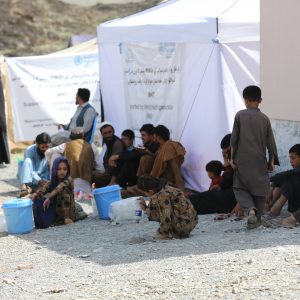
Poverty & Hunger in Canada
Event 1: Sister Naveeda S. (name changed for privacy reasons) is a 36-year-old mother of three living in the Matheson and Mavis area of Mississauga. When she met GTA Muslims Today in March 2025, she shared with us that for the last 15 months, she had been surviving on just two meagre meals a day after losing her job as a packaging supervisor at a large online retailer’s warehouse. Although she was clearly in distress, she had one major support: her neighbourhood food bank, which served as a lifeline for her and her children. She relied on this food bank for more than 40% of her groceries, including canned vegetarian items and wheat flour, which enabled her to put food on the table for her children in the mornings and evenings until she found a new job.
Event 2: Brother Jameel Q., an imam and manager at a Muslim welfare centre in Scarborough, expressed gratitude that his centre’s food bank could assist residents with whatever little it received in donations—especially Halal meat, which was scarce at mainstream food banks. However, during an interview with GTA Muslims Today in February 2025, Imam Jameel shared a troubling observation. For the first time in his tenure, he noticed well-dressed individuals visiting the food bank for supplies. Some even parked a few blocks away and walked to the centre to avoid being identified as undeserving of free assistance.
Top Numbers: According to a recent report on food insecurity in the Greater Toronto Area (GTA), approximately 4.1 million people used food banks from March 2024 to April 2025.
The 2025 ‘Who’s Hungry Report’ reveals an increase of 636,962 additional visits compared to 2024, marking a staggering 340% rise since 2019. Other crucial findings include more than 112,000 first-time food bank clients.
Perhaps the most shocking finding in this report is that one in four food bank clients are children, with 18% of households with children reporting that their kids went hungry at least once a week.
Halal food banks in the GTA face a similar struggle, battling to survive and serve amidst a growing demand for aid. With Muslims making up 5% of Canada’s population, the need for halal-certified food has grown significantly in recent years, driven by increasing immigration from Muslim-majority nations and the expanding second-generation Muslim community within Canada.
These halal food banks are seeking greater involvement from local mosques, community groups, and businesses. Donations are especially critical during peak seasons, such as Ramadan, when demand for halal food increases significantly.



Read also